Search

Shanghai Pathways Blog

Understand ​China​ ​From the Local ​Perspect​ive

Author

Janny Chyn

Janny Chyn is the founder of Shanghai Pathways (www.shanghaipathways.com), a platform that engages people to learn and understand the city through unique cultural activities “off the beaten tracks.” She is also a writer for The Courier magazine and has been a guest speaker for schools and organizations. Apart from running Shanghai Pathways, Janny provides training and consultation service for corporate clients such as P&G, Ipsos and Google. Her current work has been featured in media outlets including Los Angeles Times, Miami Herald, CNNgo, The Sacramento Bee, Zester Daily, Nomadic Notes, Business Mirror, Shanghai Morning Post, Daily Secret.

Vegetarian Restaurants in Shanghai

This slideshow requires JavaScript.

China was a major center of Buddhism and the founding state of Taoism, two nature-oriented philosophies that promote vegetarianism and low-impact living.  Most Chinese vegetarians are Buddhists, following the Buddhist teachings about minimizing suffering. In addition, many Yoga enthusiasts in China are vegetarians or vegans.  Nowadays, in order to keep healthy and fit, more and more Chinese people who are not vegetarians or vegans, tend to eat vegetarian food from time to time. Therefore, vegetarian food is common and readily available in China, though vegetarianism is only practiced by a relatively small fraction of the population. Some Chinese people also choose to stop eating meat when they learn that animals suffer for its production.

Last week, I went on a 3 days tour in Veg style,  although I love meat, I totally enjoied the experience and found some amazing restaurants, following is a list of the good ones:

Lucky Zen & Veg Restaurant – home style, very good taste.

Dashu Wujie Vegetarian – high end,  beautiful concept and great food.

Kush Vegetarian café – organic, fresh and the best veg burger in town

The Grey Gardens in Shanghai


I just had the strangest Xmas eve and it has been all over my head. Everything started with my hopless curiosity towards Shanghai’s hidden buildings and its fascinating history.

At the off the beaten part of the oldest Shanghai corner, there is one small street called the heavenly light lane – walk inside the lane and looking for a wooden house with two beautiful Chinese red lanterns. Across from it, you will find a big black gate with a huge stone outside with the sign of Shanghai’s Gov. Protect building. 

Few people know about the story of this lane’s name, the heavenly light lane is the first place where Shanghai put the 1st public street electronic light, locals regarded the light as it has been sent from the heaven and guides people to their home.  So no one will be lost or suffering from the dark night.  Inside the big black gate, there is a big traditional family house with 3 gardens, it is over 250 year old and around 2000 square meters in size.

It feels like such a desserted place in the most crowed part of the city, standing by the gate, you don’t even sense any alive human beings inside.  Once you get in, the beautiful building is falling apart in front of your eyes. There is only a 89 years old woman and her 58 years old daughter live inside, it is hunted, overwhelming and you can tell how pretty this place was – and it is still unquestionably pretty.

The old lady speaks English and shared stories of her family, her daughter loves talking and always wanted to jump into the conversation even that she don’t understand much English. As mother and daughter, their difference is striking, one thing in common is that each of them has a crazy son and they are both trapped in this place or held back by their sorrows. 

“Don’t you feel this is sad? Don’t you have any compassion? ” – this question shots into my heart. I wonder if I ever should visit this place.

What can I say when I know that it is not up to me to change anything, the local gov. is offering the mother and daughter 5 million RMB to buy the place so the renovation could be done, but the daughter wanted more money. Their relatives have all been moved out and running successful business, they are the only 2 who are left behind to look after the old house. The older son of this 89 years old woman is a successful university professor in Canada, but her heart is always with her crazy younger son in Shanghai’s hospital so she don’t want to move to Canada. The divorced daughter said that she wanted to travel, but she also have to take care of her son who is in the hospital as well.

Is this sad? Yes and No, the house has become decrepit, but it is home to them. Life is not easy for everyone but there were happy moments, photos of this 89 years old woman who was an educated and beautiful Shanghai girl dressed in elegant Qipao. Paintings of her clever husband who was the most famous expert of ancient architecture in China, the daughter’s lively water-color flower paintings hanging on the walls of their house…

Life goes on, people have to move on.

Just like everything in Shanghai, things happened so fast and who has the time to be sad? Now, both of them are retired, the mother enjoy to chat with her old neighbors and the daughter like to dance in the park and charges an entrance fee towards the visitors, they argue with each other and they rely on each other. 

Anyway, I will go back again, I need to understand more and see what I could do.

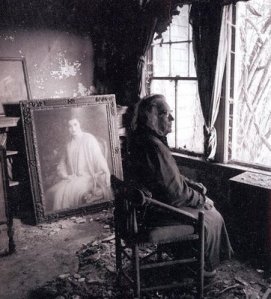
After the trip, Xmas eve, I watched Grey Gardens – a movie based on the life stories of the eccentric aunt and first cousin of Jackie Onassis (both named Edith Bouvier Beale aka “Big and Little Edie”) raised as Park Avenue débutantes but who withdrew from New York society, taking shelter at their Long Island summer home, “Grey Gardens.” As their wealth and contact with the outside world dwindled, so did their grasp on reality. The two women become reclusive and known around town as the highly eccentric proprietors of Grey Gardens, which has become decrepit and full of stray animals taken in by the Beale women. They were reintroduced to the world when international tabloids learned of a health department raid on their home, and Jackie swooped in to save her relatives.

By the mid of the night, a “lost in touch” childhood friend contacted me for a merry Xmas, how strange is that we used to hang out together all the time during our teens. Now we have completely different life styles and the changes has been dramatic.


Last Train Home


Got to know this movie from a German friend, it is depressing but fascinating at the same time. We all know about the problem, but what can we do to solve it? Can we still afford to have dreams? Do we really know what we want in life?

Every spring, China’s cities are plunged into chaos, as all at once, a tidal wave of humanity attempts to return home by train. It is the Chinese New Year. The wave is made up of millions of migrant factory workers. The homes they seek are the rural villages and families they left behind to seek work in the booming coastal cities. It is an epic spectacle that tells us much about China, a country discarding traditional ways as it hurtles towards modernity and global economic dominance.

Last Train Home draws us into the fractured lives of a single migrant family caught up in this desperate annual migration. Sixteen years ago, the Zhangs abandoned their young children to find work in the city, consoled by the hope that their wages would lift their children into a better life. But in a bitter irony, the Zhangs’ hopes for the future are undone by their very absence. Qin, the child they left behind, has grown into adolescence crippled by a sense of abandonment. In an act of teenage rebellion, she drops out of school. She too will become a migrant worker. The decision is a heartbreaking blow for the parents. In classic cinema verité style, Last Train Home follows the Zhangs’ attempts to change their daughter’s course and repair their ruptured family. Intimate and candid, the film paints a human portrait of the dramatic changes sweeping China.

KFC’s Success in China

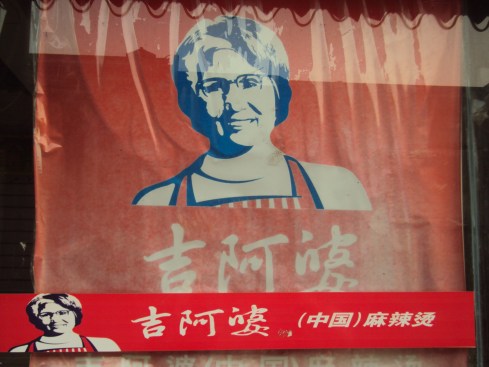
If there were just a few things that China has wholly embraced from the West, it would be our love for Kentucky Fried Chicken, or KFC as it is more commonly known. Bloomberg reports that “Colonel Harland Sanders’s image is a far more common sight in many Chinese cities than that of Mao.” It was the first Western fast food chain to arrive in China. In 1987, this fast-food operator opened its first outlet near Tianamen Square in Beijing. Even McDonald’s is no match for KFC in China as Colonel Rules Fast Food. By 2008, KFC had twice as many outlets in China as McDonald’s, a reversal of the ratio in other parts of the world. 

Today, KFC customers can purchase a bowl of congee, a rice porridge that can feature pork, pickles, mushrooms and preserved egg, as well as buy a bucket of its famous fried chicken. In 2010, Yum(KFC’s parent company) expected to make 36 percent of an estimated $2 billion operating profit from 3,700 restaurants in China — eclipsing for the first time its total earnings from the 19,000 Taco Bell, Pizza Hut, KFC, Long John Silver’s and A&W restaurants it owns in America. Yum announced on Jan. 18 that it will sell its Long John Silver’s and A&W chains in part to focus on China.

However, nothing breeds imitators like success. I found this noodle store in Fengjing watertown, it is very  funny and I can’t help but wondering who is the designer behind the idea .

City of Life and Death (Nanjing! Nanjing!)

Yet another movie which I had to watch to fully understand the Nanjing massacre. It’s gruesome suffering all the way so my friend did not finish it, I guess it is not the best kind of movie to watch during the weekend or in the evening if you want to have a good sleep.

Harrowing and unflinching, a savage nightmare so consuming and claustrophobic you will want to leave but fear to go, “City of Life and Death” is a cinematic experience unlike any you’ve had before. It’s a film strong enough to change your life, if you can bear to watch it at all.

The third film by formidable Chinese director Lu Chuan, “City of Life and Death” takes as its subject the infamous atrocity known as the rape of Nanking. That was the 1937-38 Japanese takeover of China’s then capital city that led to the deaths of an estimated 300,000 civilians as well as sexual assaults said to number in the tens of thousands.

Compassion for Migrant Children

This slideshow requires JavaScript.

There are an estimated 110 million migrant workers in China aged between 16 and 40 years old. They left home in the hope of building a better life for themselves and their family, yet when they start a family of their own, they are faced with a stark choice; either take their children to the cities and subject them to institutionalized discrimination, or leave them behind in the countryside in the uncertain care of relatives. 

Luckily in 2010, Shanghai became the first Chinese city to provide free education to all school-age children of migrant workers, through more government investment in facilities and teachers.  Compassion for Migrant Children(CMC) builds community centers in the heart of migrant neighborhoods, they offer programs for migrant children and their family.

The CMC Shanghai community center is about forty minutes drive outside of city center. It is located inside a huge wet market where you can find alive chicken, fish, meat and all kinds of veg. We went to join their reading program and worked with groups of 1-3 students to read kindergarten and first grade-level books in English. The program objectives are to help the students get excited about English, have fun learning English, and improve their reading skills.

Shanghai Girls

When I first heard about Lisa Lee, it is because of her famous book of  Snow Flower and the Secret Fan. However I was not able to find the book in Shanghai and so only watched the movie. Perhaps it was because that my expectation was too high, the movie seemed a bit disapporting. 

One day I find Shanghai Girls and I was really tired when I finished the book. It was one of those where I had to stay up one night to finish it because when I tried to put it down, the story kept turning over in my head. I do have to admit that part of me kept wondering what else could go wrong as the story progressed. This is a wonderful book filled with dynamic history and rich characters and more important it is about woman from Shanghai – the city where I was born and raised.

Shanghai Girls is about two sisters, Pearl and May, who leave Shanghai in 1937 and go to Los Angeles in arranged marriages. It is a story of immigration, identity, war, and love, but at its heart, Shanghai Girls is a story of sisters. Pearl and May are inseparable best friends, who share hopes, dreams, and a deep connection. But like sisters everywhere, they also harbor petty jealousies and rivalries.

Shanghai/China in 10 minutes

About China


About Shanghai

The Avocado Lady

This slideshow requires JavaScript.

There is always something special about Shanghai, the famous Avocado Lady is one perfect sample. If you start talking about the Avocado Lady to English speaking Chinese people, probably none of them will understand what you mean and wondering if it is an urban myth. But to many expats she is one of Shanghai’s urban legends. Known as the Shanghai local business owner Jiang Qin, her claim to fame is the selection of imported foods she stocks at her small grocery store on Wulumuqi Lu which undercut prices at Cityshop and the like. Now, it’s easy to overlook the place (actually, the number of foreigners shopping in the place is a big hint to finding it and the store’s been so successful it’s doubled in size) but step inside and you’ll find a good range of imported cheese and rare finds (Do you like Sichuan pepper in your cheese? She’s got it.), meats and fish, herbs, spices, olives, mustards, jams, the list goes on and of course those famous avocados for 10RMB per piece.

The personal story of this interesting and hard-working woman is really inspiring. 20 years ago, she came to Shanghai from Nantong(a nearby city around 3 hours by bus). And she started small business of a vegetable and grocery store. During the years, she learnt how to speak English and western cooking from her expats clients. Amazingly, she is always able to find special things that her clients wanted to buy. This made her different and stand out from the crowds.

As I know from talking with her, Ms Liang tought herself English, and learnt it by being open, chatting with her clients. Without computer and internet skills, she is able to search things that people can not find in Shanghai. In 365 days, she will only rest for 3 days and go back to her home town during the Chinese new year, the store opens every day at 4:30am.

Honestly, I am not sure if I can do better…

The Rape of Nanking

Ever since that I got a group request of visiting the Nanjing Massacre Museum for Feb 2012, I started to reseach more about this part of the Chinese history. 

Little by little, I got access to books, photos and archives, but I did not read The Rape of Nanking until today. The reason is simple, the person who recommended me this book has said that herself could not finish the first 10 pages as it was very depressing to read, even its author Iris Chang suffered a nervous breakdown and killed herself in 2004.

Looking at Iris, she is beautiful, the best-selling author, mother of a boy… I am not sure what to say towards her tragedy.  So when I am finally decided to looking into this book, I have been prepared and ready to absorb all the disturbing historical infos….still it has been really overwhelming and too powerful to handle, cruel images and the craziness of the war filled up with my head and making me feel uneasy with the comfort of my real happy world.

Yet, I am still counting on the date of visiting the Nanjing Massacre Museum and the emotional feelings which will embrace me.

China has endured much hardship in its history, as Iris Chang shows in her ably researched The Rape of Nanking, a book that recounts the horrible events in that eastern Chinese city under Japanese occupation in the late 1930s. Nanking, she writes, served as a kind of laboratory in which Japanese soldiers were taught to slaughter unarmed, unresisting civilians, as they would later do throughout Asia. Likening their victims to insects and animals, the Japanese commanders orchestrated a campaign in which several hundred thousand–no one is sure just how many–Chinese soldiers and noncombatants alike were killed. Chang turns up an unlikely hero in German businessman John Rabe, a devoted member of the Nazi party who importuned Adolf Hitler to intervene and stop the slaughter, and who personally saved the lives of countless residents of Nanking. She also suggests that the Japanese government pay reparations and apologize for its army’s horrific acts of 60 years ago.

Art or Food?!

This slideshow requires JavaScript.

There is one eye catching and breath taking place called the Pan Garden, it hides in one of the best protected old lanes in Suzhou. In the past, the house was a private home of the richest family in the city with a history of over 150 years. Now it turned into a very fancy Suzhou flavor restaurant named as Li Geng Tang. There are only 4 tables inside 4 different houses of this garden and you need to book it days in advance with a deposit. The min. charge per perosn is RMB400 and it goes all the way to as high as RMB2000. Interestingly, they do not have a menu.

Since I never miss a good meal, I went  there to check out, the experience was beyond my expectation…the food looks too beautiful to eat, the house takes you back in to the old life and more important the taste was very authentic.

Next to the dinning table, they even prepared a bed for you after the big meal….heaven on earth.

SSO Chamber Concert

Normally for concert, I will go to Shanghai Oriental Art Center – but honestly, I am not a big fan of classical music, just follow with friends who happen to have the extra tickets.  And every time when I was there, I wished that I know abit more about the history of the music or the story of the composer. 

So when I walks by Hunan road, I noticed the building of SSO Chamber Concert(Shanghai Sympgony Orchestra), finally yesterday I paid a visit with 2 friends. Strangly, it was so much better than what I thought it would be for a ticket of only RMB30 – that’s what would cost you for a starbucks coffee in Shanghai.

It is the only none – profit chamber music concert in Shanghai. The place is very basic, simple chairs filled the place and yesterday night was full with mostly Chinese people of different ages and back ground. There is a very friendly feeling compare with the big fancy SOAC, it is like a working place and the concert was great. I found out that I liked Faure’s music and listened to Piazzolla for the 1st time, good for the ear!

They play every Friday at 7:30pm, I will surely go there again.

They Chose China

Who would believed that such story happened in China? I wonder…. In the end, people are alike.

In this feature documentary, Oscar-nominated filmmaker Shuibo Wang (Sunrise Over Tiananmen Square) aims his camera at the astonishing story of 21 American soldiers who opted to stay in China after the Korean War ended in 1954. Back home in the United States, McCarthyism was at its height and many Americans believed these men were brainwashed by Chinese communists. But what really happened? Using never-before-seen footage from the Chinese camps and interviews with former prisoner of war (POWs) and their families, They Chose China tells the fascinating stories of these forgotten American dissidents.

Guanyin Pusa – Legend of Miao Shan

Guanyin is an extremely popular Goddess in Chinese folk belief and is worshiped in Chinese communities throughout East and South East Asia. Guanyin is revered in the general Chinese population due to her unconditional love, compassion and mercy. She is generally regarded by many as the protector of women and children. By this association she is also seen as a fertility goddess capable of granting children. An old Chinese superstition involves a woman wishing to have a child offering a shoe at a Guanyin Temple. Sometimes a borrowed shoe is used then when the expected child is born the shoe is returned to its owner along with a new pair as a “thank you” gift. Guanyin is also seen as the champion of the unfortunate, the sick, the disabled, the poor, and those in trouble. Some coastal and river areas of China regard her as the protector of fishermen, sailors, and generally people who are out at sea, thus many also come to believe that Mazu, the Daoist goddess of the sea, is a manifestation of Guanyin. Due to her association with the legend of the Great Flood, where she sent down a dog holding rice grains in its tail after the flood, she is worshiped as a rice goddess. In some quarters, especially among business people and traders, she is looked upon as a Goddess of Luck and Fortune. In recent years there have been claims of her being the protector of air travelers.

Believe it or not, there is an amazing story about her:

According to the story, a king asked his daughter Miao Shan to marry a wealthy man who is not caring, she told him that she would obey his command, so long as the marriage eased three misfortunes.

The king asked his daughter what were the three misfortunes that the marriage should ease. Miaoshan explained that the first misfortune the marriage should ease was the suffering people endure as they age. The second misfortune it should ease was the suffering people endure when they fall ill. The third misfortune it should ease was the suffering caused by death. If the marriage could not ease any of the above, then she would rather retire to a life of religion forever.

When her father asked who could ease all the above, Miao Shan pointed out that a doctor was able to do all of these. Her father grew angry as he wanted her to marry a person of power and wealth, not a healer. He forced her into hard labor and reduced her food and drink but this did not cause her to yield.

Every day she begged to be able to enter a temple and become a nun instead of marrying. Her father eventually allowed her to work in the temple, but asked the monks to give her the toughest chores in order to discourage her. The monks forced Miao Shan to work all day and all night, while others slept, in order to finish her work. However, she was such a good person that the animals living around the temple began to help her with her chores. Her father, seeing this, became so frustrated that he attempted to burn down the temple. Miao Shan put out the fire with her bare hands and suffered no burns. Now struck with fear, her father ordered her to be put to death.

In one version of this legend, when she was executed, a supernatural tiger took Guanyin to one of the more hell-like realms of the dead. However, instead of being punished by demons like the other inmates, Guanyin played music and flowers blossomed around her. This completely surprised the head demon. The story says that Guanyin, by merely being in that hell, turned it into a paradise.

A variant of the legend says that Miao Shan allowed herself to die at the hand of the executioner. According to this legend, as the executioner tried to carry out her father’s orders, his axe shattered into a thousand pieces. He then tried a sword which likewise shattered. He tried to shoot Miao Shan down with arrows but they all veered off.

Finally in desperation he used his hands. Miao Shan, realising the fate the executioner would meet at her father’s hand should she fail to let herself die, forgave the executioner for attempting to kill her. It is said that she voluntarily took on the massive karmic guilt the executioner generated for killing her, thus leaving him guiltless. It is because of this that she descended into the Hell-like realms. While there she witnessed first hand the suffering and horrors beings there must endure and was overwhelmed with grief. Filled with compassion, she released all the good karma she had accumulated through her many lifetimes, thus freeing many suffering souls back into Heaven and Earth. In the process that Hell-like realm became a paradise. It is said that Yanluo, King of Hell, sent her back to Earth to prevent the utter destruction of his realm, and that upon her return she appeared on Fragrant Mountain.

Another tale says that Miao Shan never died but was in fact transported by a supernatural tiger, believed to be the Deity of the Place, to Fragrant Mountain.

The Legend of Miao Shan usually ends with Miao Chuang Yen, Miao Shan’s father, falling ill with jaundice. No physician was able to cure him. Then a monk appeared saying that the jaundice could be cured by making a medicine out of the arm and eye of one without anger. The monk further suggested that such a person could be found on Fragrant Mountain. When asked, Miao Shan willingly offered up her eyes and arms. Miao Chuang Yen was cured of his illness and went to the Fragrant Mountain to give thanks to the person. When he discovered that his own daughter had made the sacrifice, he begged for forgiveness. The story concludes with Miaoshan being transformed into the Thousand Armed Guanyin, and the king, queen and her two sisters building a temple on the mountain for her. She began her journey to heaven and was about to cross over into heaven when she heard a cry of suffering from the world below. She turned around and saw the massive suffering endured by the people of the world. Filled with compassion, she returned to Earth, vowing never to leave till such time as all suffering has ended.

After her return to Earth, Guanyin was said to have stayed for a few years on the island of Mount Putuo where she practised meditation and helped the sailors and fishermen who got stranded. Guanyin is frequently worshipped as patron of sailors and fishermen due to this. She is said to frequently becalm the sea when boats are threatened with rocks. After some decades Guanyin returned to Fragrant Mountain to continue her meditation.
Chinese Symbolism – Bats

This slideshow requires JavaScript.

Symbolism is an essential part of Chinese culture, contained within fundamental methods of communication, such as speech patterns. Chinese languages are tonal, resulting in a fondness for puns and wordplay. In Mandarin Chinese, four distinct variations in tone are used to distinguish words from one another. For instance, “fu” can represent either good fortune or a winged bat, depending on the intonation used.  For this reason, bats-feared in the West-are symbolic of good fortune in China, so bats and their depiction are considered good luck.  In ancient China, bats were used to be the most popular being reflected in furnitures, architecture and including the embroiderment in imperial robes for high ranking officials and the emperor to signify prosperity and excellent fortune.

In the Yu Garden of Shanghai, they often seen as two bats or five bats but seldom alone.  Two bats “shuang1 fu2” 双福 means double luck. A design of two bats with a scepter ru2 yi4 means “double happiness as wished”. Five bats “wu3 fu2” 五福 means Five Fortunes referring to longevity, wealth, health, love and a natural death at a ripe age. For example, Five bats surrounding the Chinese character for longevity shou4 寿 is a very powerful symbol of fortune and longevity. A red bat is especially auspicious because red “hong2” 红 has the same sound as vast “hong2” 宏. So a red bat means “vast fortune”.

When a bat symbol is shown with a coin – fu2 zai4 yan3 qian2 福在眼前 – it means fortune before your eyes. Why? Because before “qian2” and coin “qian2” sounds exactly the same. Another great visual pun.

Pickled Vegetables

This slideshow requires JavaScript.

Once you step outside the city center, there are things that you don’t know about.  The strange white things hanging in the air looks like socks….but they are actually sliced white turnip, the farmers wanted to dry it under the winter sun to naturally dehydrate.  It is then brought indoors to start the fermentation process with chili powder, Chinese herbs and salt. 

You could write a book about pickled vegetables in China as people have always treasured food. All vegetables, all meats are carefully preserved after harvests to last the year round. In China, even the humblest vegetables are carefully salted and pickled if there are excesses that cannot be eaten or sold immediately, and from these evolved a culinary tradition that has more than rewarded these thrifty habits with enrichment of the dinner table. From the north, south, east and western provinces, different regions had their own ways of preserving mustard greens, radishes, turnips, garlic chives and cabbages.

Datou cai or the pickled kohlrabi is one humble preserved vegetable with a lot of history behind it. Its “inventor” is believed to be none other than China’s most famous master strategist Zhuge Liang (AD 181234).

The story goes that Zhuge Liang was hibernating in-between battles at his mountain retreat in Wolong, in the Xiangfan region. He was in hermitage and lived by hunting and foraging with minimum contact with the outside world. He would gather mountain herbs and dig up wild kohlrabi and cut them up, lightly salting them as a simple accompaniment to his boiled rice or millet porridge.

One day, he was suddenly summoned to court and had to leave his meal half-eaten. When he returned a week later, the pot of rice had gone moldy, but the plate of salted kohlrabi looked even better and greener. He tasted it and was surprised to find that the vegetable had actually improved in taste.

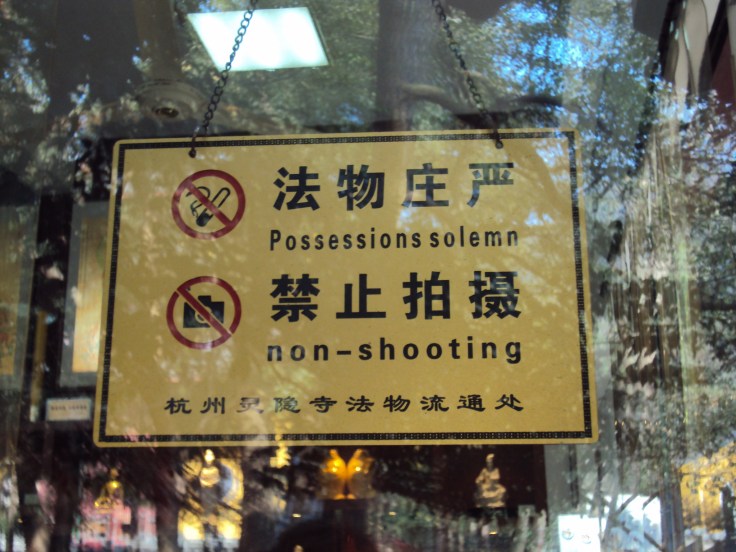
No Shooting at Temple

Found it in LinyinTemple – the oldest temple in south of China, over 1300 years old, apparently they don’t want you to shoot(taking photos) at their special temple shop.

Please Vote for Me

It’s about the class monitor elections for a class of Chinese elementary school students in Wuhan.  On a philosophical level, it’s about elections, choice, and the extent to which people manipulate systems.

Actually it is a lot of fun to watch the Chinese 3rd grade students elect their leaders. There are three children involved in the film’s class monitor race: Luo Lei, the incumbent, Cheng Cheng, a chunky little guy with his eyes on the prize, and Xiaofei, a sweet girl whose mother teaches music at the school. Cheng Cheng is the nastiest of the bunch, displaying a disturbing amount of political verve for an eight-year-old. From one day to the next, the same kid will change their loyalty based solely on who’s been the nicest to them that day—whether it’s Luo Lei giving out goodies in class, or Cheng Cheng reminding them that Luo Lei frequently beats them up for disobeying. It gets really confusing once the winner of the election is declared—the classmates don’t know whether they should be crying in sympathy for the losers, or cheering for the one who succeeded, so they do both. And in the end, one of them was able to win by giving everyone a mooncake coupon after the final speech. 

Well, it seems so true that democracy is based on popularity which breeds corruption.

Today, a friend asked me “What is the most popular thing in the world?”

Guess what is the answer?

Guns to Noodles


During a dinner, a friend shared an amazing story with me about Lanzhou La-mian (hand-stretched noodles).

In a country that bans gun ownership, Hualong, in Qinghai Province, was once notorious as China’s “capital of illegal guns.” It is an impoverished county with a predominantly Hui population, a Muslim ethnic group in China. There are 250,000 residents and about 37 percent of them lived under the state poverty line, or with an annual income less than 1,196 yuan, by the end of 2009.

Locals say many of their fathers’ generation had worked in ammunition factories during the reign of the warlords, before the founding of the People’s Republic of China in 1949. The factories were closed, but employees took home their skills. Gun trade prospered in the 1990s as strong demand pushed up gun prices on the black market.

The “Made in Hualong” brand is well-known in the criminal circle. A pistol can sell for around 20,000 yuan (2,941 U.S. dollars) in coastal cities of affluent east China, about 20 times the cost of its manufacture.

In order to stop the gun trade, Chinese Gov started a successful campaign to help impoverished farmers start up Muslim beef noodle restaurants which become the key to stopping gun-related crime and poverty – the government began to train jobless locals as la-mian chefs in 2007. In just three months, the trainees can learn the magic of hand stretching and a recipe for tasty noodle soups.

Loans are also given to families wanting to run la-mian stalls in big cities. Liaison offices have been set up across the country to help migrants adapt to their new environment — from getting a business license to sending their kids to good schools.

Therefore Hualong has become China’s major source of chefs making “la-mian” hand-stretched noodles — popular in many Chinese cities. There are about 10,000 la-mian stalls and restaurants are run by Hualong chefs in 210 cities across the country. And the number is growing.

About 67,000 Hualong people are in the la-mian business and they are expected to wire home a combined income of 300 million yuan by the end of this year.

Ma Helu, who runs a 70-square-meter la-mian stall in east China’s Nanjing City, says life is good as the family of four can earn 70,000 yuan (10,500 dollars) a year after paying rent and daily expenses.

In Hualong, the la-mian business appears to be the recipe to wealth, officials say, and the gun problem serves as the barometer to measure the success of the la-mian drive.

I wish I knew

The name of this film comes from a really old Shanghai song, it is about the past of the city and many of its amazing stories. The more I gets to know it, the more unknown I felt. I think I will NEVER get tired of Shanghai.

I Wish I Knew, it was directed by famous Chinese director Jia Zhangke.  The focus of the film is on understanding Shanghai’s recent history through interviews with people closely related to the past and present stories of this city.  Jia selected 18 individuals to follow, from a pop star to the grandchild of China’s most influential general.  This film won the Keno Pen Award from the Montreal International Documentary Festival.

Blog at WordPress.com.

Up ↑